The reputation of kale smoothies as unpleasant health drinks that only the most dedicated wellness enthusiasts can stomach is almost entirely the result of bad recipes. When kale is combined with the wrong ingredients, blended too briefly, or prepared without the acidic element that neutralizes its bitter compounds, it produces a drink that is genuinely difficult to enjoy. But when it is done correctly, which means the right fruit, enough acid, sufficient blending time, and the proper liquid-to-solid ratio, kale disappears completely and leaves behind nothing but a beautiful green color and a smooth, sweet, tropical flavor that gives no indication of the extraordinary nutritional content hiding inside.
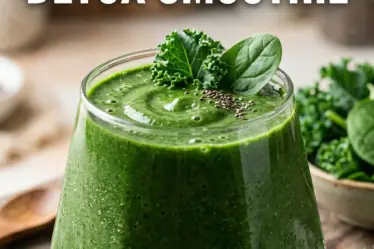
The recipe is the Easy Kale Mango Detox Smoothie. Remove the stems from two large kale leaves and tear the leaves roughly. Add the kale to your blender with one cup of coconut water and blend on high for thirty seconds before adding anything else. This pre-blending step is the single most important technique for making a smooth, palatable kale smoothie and it is the step that most beginners skip. After thirty seconds, the kale should be almost completely broken down into a thick green liquid. Now add one cup of frozen mango, one frozen banana, the juice of one lime, and half a teaspoon of turmeric and blend on high for a further sixty seconds. The result is a vivid, tropical smoothie with a silky texture and a flavor that is overwhelmingly mango and banana with absolutely no trace of kale.
Kale’s detoxifying properties are centered primarily in its glucosinolates, sulfur-containing compounds that are converted by the body into sulforaphane and indole-3-carbinol. These conversion products activate detoxification enzyme systems in the liver that transform fat-soluble toxins, environmental chemicals, excess hormones, and metabolic waste products into water-soluble forms that can be safely excreted. This process, known as phase two liver detoxification, is the step that most liver support supplements claim to activate but rarely do with the potency that kale achieves through consistent daily consumption. Kale is also one of the richest dietary sources of vitamin K1, a nutrient that plays essential roles in blood coagulation and bone metabolism and that most people consume far below adequate levels.
Mango contributes beta-carotene, vitamin C, and mangiferin, a unique xanthonoid that has been shown in research to support fat metabolism, improve insulin sensitivity, and reduce the markers of systemic inflammation. The vitamin C in mango enhances the absorption of the non-heme iron in the kale, making the iron from this smoothie significantly more bioavailable than from kale consumed without a vitamin C source. Iron deficiency is one of the most prevalent nutritional deficiencies globally and one of the most common hidden causes of fatigue, poor concentration, and slow metabolism.
Turmeric adds curcumin that supports liver cell protection and reduces the hepatic inflammation that impairs detoxification capacity. Lime provides additional citric acid and vitamin C that stimulate bile production and reinforce the liver-activating effect of the turmeric and the kale glucosinolates. Banana provides natural sweetness, potassium, and resistant starch that feeds the beneficial gut bacteria responsible for converting kale’s glucosinolates into their active sulforaphane form. The efficiency of this conversion depends significantly on the health of your gut microbiome, which is why supporting gut bacteria through resistant starch and prebiotic fiber is an essential part of maximizing the detox benefits of any kale smoothie. Drink this smoothie every morning for ten days on an empty stomach and the improvements in your energy, digestion, and skin will confirm that something genuinely powerful is happening inside your body.