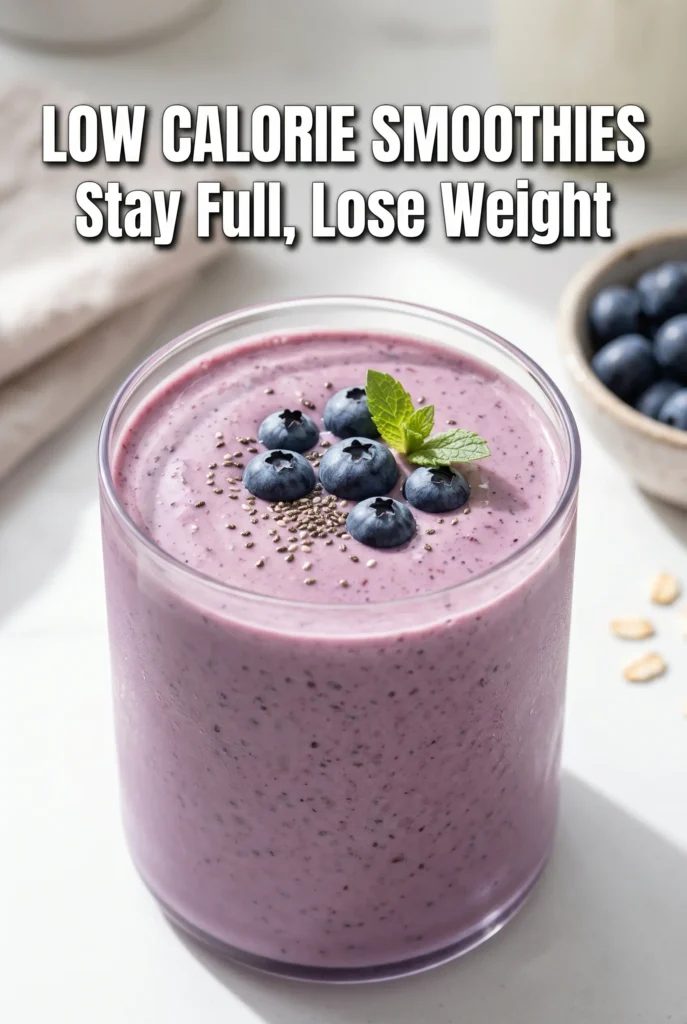
What Makes a Smoothie Truly Low Calorie
Low calorie smoothies have a reputation for being watery, unsatisfying drinks that leave you hungry thirty minutes after drinking them. The reason most low calorie smoothie recipes fail is that they cut calories by simply reducing the amount of food in the blend rather than by choosing ingredients that are naturally low in calories but high in the nutrients that create genuine, lasting fullness. A smoothie that keeps you satisfied until lunch is not just low in calories. It is strategically built with the right fiber, protein, and volume to suppress hunger hormones and keep your blood sugar stable throughout the morning.
The most important insight for making low calorie smoothies that actually work is that volume matters as much as calories. Your stomach has stretch receptors that send fullness signals to your brain when it is physically full, regardless of how many calories that volume contains. High-water vegetables like cucumber, celery, and spinach add enormous volume to a smoothie for almost no calories. Two cups of spinach contains only 14 calories. One full cucumber contains only 45 calories. These ingredients let you build a large, physically filling smoothie that stays well under 300 calories per serving.
The Best Low Calorie Smoothie Ingredients
Low Calorie Fruits
Not all fruits are equal when it comes to calorie density. Berries are the clear winner for low calorie smoothies, providing intense flavor, powerful antioxidants, and significant fiber for very few calories. One cup of mixed berries contains only around 65 calories while providing 4 grams of fiber and more vitamin C than many citrus fruits. Watermelon is 92 percent water and provides only 80 calories per two cups, making it one of the most voluminous and hydrating low calorie smoothie bases available. Green apple is lower in sugar than most other fruits and provides pectin fiber that slows digestion and reduces hunger for hours after consumption.
Low Calorie Vegetables
Spinach, kale, cucumber, celery, and zucchini are all exceptionally low in calories while being rich in vitamins, minerals, and plant compounds that support weight loss and overall health. Adding two cups of spinach to a smoothie adds only 14 calories while contributing iron, magnesium, folate, and chlorophyll that support liver detoxification and fat metabolism. Cucumber adds volume, hydration, and a cooling freshness for only 45 calories per full cucumber. Celery provides natural diuretic compounds that reduce water retention for only 10 calories per stalk.
Protein Sources for Satiety Without Calories
The most calorie-efficient protein sources for low calorie smoothies are plain non-fat Greek yogurt at 100 calories per three-quarter cup with 17 grams of protein, hemp seeds at 57 calories per tablespoon with 3 grams of complete protein, and unsweetened protein powder at around 120 calories per scoop with 25 grams of protein. Adding one of these protein sources to a low calorie smoothie transforms it from a light refreshing drink into a filling meal replacement that keeps hunger away for three to four hours.
Five Low Calorie Smoothies Under 300 Calories
The 200 Calorie Green Detox
Blend two cups of baby spinach, one cup of frozen mixed berries, half a frozen banana, the juice of half a lemon, one tablespoon of chia seeds, and one cup of cold water. This smoothie comes in at approximately 190 to 210 calories per serving and provides 8 grams of fiber, 5 grams of protein, and a full day’s worth of vitamin C. The berries and banana create enough sweetness that the spinach is completely undetectable, and the chia seeds expand in your stomach and keep you full until lunch.
The Cucumber Celery Flush
Blend one full cucumber, three stalks of celery, one green apple, the juice of one lemon, a small piece of fresh ginger, and one cup of cold water. This smoothie contains only around 140 to 160 calories per serving and is the most hydrating and detoxifying recipe on this list. The cucumber and celery together act as natural diuretics that flush out excess water weight, and the lemon and ginger stimulate liver bile production and raise your metabolic rate. This is the smoothie to drink on mornings when you wake up feeling particularly bloated or heavy.
The Low Calorie Berry Protein Shake
Blend one cup of frozen mixed berries, three quarters of a cup of non-fat Greek yogurt, one tablespoon of ground flaxseed, and one cup of unsweetened almond milk. At approximately 220 to 240 calories per serving, this smoothie provides 20 grams of protein and 6 grams of fiber that together create one of the strongest and most sustained fullness responses of any recipe on this list. The Greek yogurt adds probiotics that support gut health and the flaxseed provides omega-3 fatty acids that reduce the inflammation that drives fat storage.
The Watermelon Mint Hydration Smoothie
Blend two cups of frozen watermelon chunks, a handful of fresh mint leaves, the juice of one lime, one tablespoon of chia seeds, and half a cup of cold water. This smoothie contains only around 130 to 150 calories per serving and is the most refreshing low calorie option available. Watermelon provides lycopene and citrulline that support cardiovascular health and muscle recovery, mint aids digestion and reduces bloating, and the chia seeds add fiber that slows sugar absorption and extends fullness.
The Green Apple Spinach Morning Blend
Blend one green apple, two cups of spinach, half a cucumber, the juice of half a lemon, half a teaspoon of ground ginger, one tablespoon of hemp seeds, and one cup of cold water. At approximately 175 calories per serving, this smoothie is low enough in calories to be drunk daily without affecting a calorie deficit while being rich enough in fiber, protein, and nutrients to provide genuine morning energy and satisfaction. The green apple’s pectin and the hemp seeds’ protein work together to keep hunger suppressed for hours.
How to Build Your Own Low Calorie Smoothie
The formula for a low calorie smoothie that works is simple. Start with one cup of an unsweetened liquid base such as water, coconut water, or unsweetened almond milk for 0 to 40 calories. Add two cups of leafy greens for 14 to 30 calories. Add one serving of low calorie fruit such as half a cup of berries or half a banana for 40 to 60 calories. Add one protein source such as a scoop of protein powder or three quarters of a cup of non-fat Greek yogurt for 100 to 120 calories. Add one tablespoon of a fiber source such as chia seeds or ground flaxseed for 50 to 60 calories. The total comes to approximately 200 to 290 calories per serving with enough protein, fiber, and volume to keep you genuinely full until your next meal.
Tips for Making Low Calorie Smoothies More Satisfying
Always use frozen fruit rather than fresh. Frozen fruit creates a thicker, colder smoothie that feels more substantial and filling than a room-temperature blend. Drink your smoothie slowly over ten to fifteen minutes rather than consuming it quickly. The fullness hormones triggered by eating take time to reach your brain, and slow consumption ensures they are fully activated before you finish your smoothie. Add a pinch of sea salt to any low calorie smoothie that contains fruit. Salt enhances sweetness perception and makes low sugar recipes taste more satisfying without adding any meaningful calories. Use a large glass or bowl rather than a small cup. Physically seeing and consuming a larger volume of food is known to increase satiety perception even when the calorie content is identical.